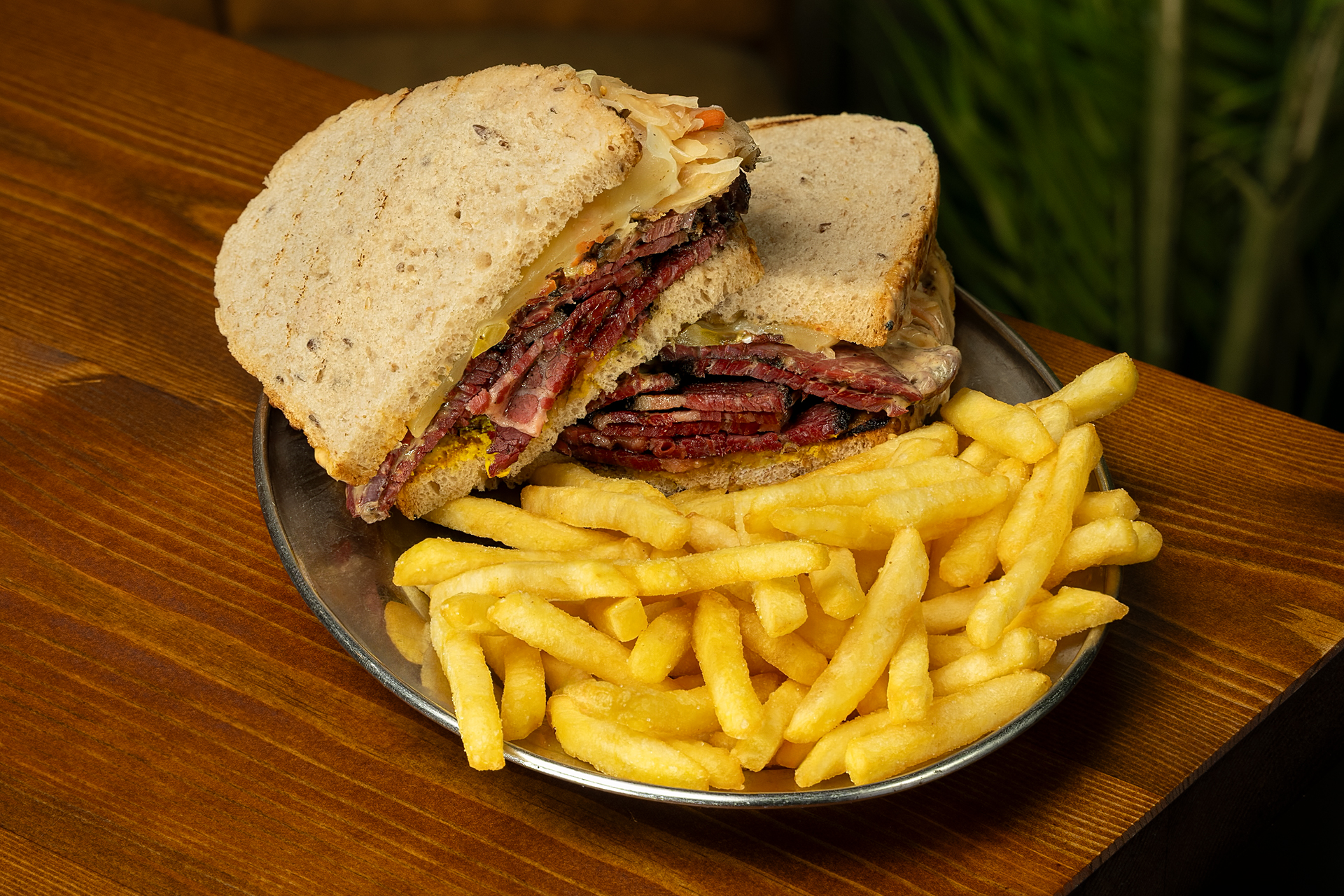
Ten days, one sandwich. The brine, the rub, the overnight smoke and the hand-slice behind our signature pastrami.
There is a sandwich in New York that people queue around the block for, and have done for well over a century. It isn't complicated. It is beef, salt, smoke, time and a slice of rye bread. But the people who make it properly have spent generations refining every one of those steps, and you can taste the difference the moment it reaches the table.
Britain has never really had that sandwich. We have had versions of it, usually made with meat that arrived pre-cooked and pre-sliced in a vacuum pack, and that is not the same thing at all. So when we started building Strami & Steak, we decided that if we were going to put pastrami on the menu, we were going to make every last gram of it ourselves, under our own roof, with nothing bought in.
This is how it's done.
It starts with the beef
Good pastrami is decided long before anything goes near a smoker. We use Black Angus beef, and we're particular about the cut, because the fat is what carries the flavour through the cure and stops the meat drying out over the hours it spends in the smoke. A lean cut will give you something you can slice neatly and nothing you'd want to eat twice.
Every brisket is trimmed by hand in our prep room. It's slow work, and there's no way around it, because the amount of fat left on the meat changes how the cure penetrates and how the finished pastrami eats.
Then it goes in the brine
This is the part nobody sees, and it's the part that matters most. Each brisket goes into a wet cure made up of salt, sugar, garlic, bay and a blend of warm spices that we worked on for months before we were happy with it. Then it sits, cold and submerged, for days on end.
You cannot rush a cure. The salt needs time to work its way into the centre of the muscle, and until it gets there the meat will be seasoned on the outside and bland in the middle. Pull it out early and you have brisket. Leave it the full time and you have the beginnings of pastrami.
It's the single biggest reason most places don't make their own. Holding that much beef in brine for that long takes space, money and planning, and it means that what we serve on any given day was started well over a week beforehand.
The rub
Once the cure has done its job, the meat is rinsed, dried and rubbed by hand with coarsely cracked black pepper and toasted coriander seed. We grind it ourselves rather than buying it ready-milled, because the coarser texture is what builds the dark, craggy crust you see around the edge of every slice.
That crust isn't decoration. It's the seasoning layer that balances the richness of the fat, and it's the reason a good slice of pastrami tastes different at the edge than it does in the middle.
Into the smoker, overnight
The briskets go into the smoker in the evening and come out the following morning. Low temperature, real wood, no shortcuts and no gas. Smoke is not something you can add at the end to a piece of meat that hasn't earned it, and anyone who has tried will know exactly what that tastes like.
Over those hours the fat renders slowly, the crust sets hard, and the smoke works its way into the meat rather than sitting on the surface of it. It's the stage that demands the most patience and the least interference, which is why our day tends to start a lot earlier than most people's.
The step most people skip
Smoked brisket and pastrami are not the same thing, and the difference is what happens next. After the smoke, the meat is steamed until it reaches the point where it gives way under almost no pressure at all.
This is what separates pastrami from everything else on a barbecue menu. The steam relaxes the muscle and renders the last of the connective tissue, so the finished slice is soft enough to fall apart in your hands while still holding that peppery crust around the outside. Skip it, or cut it short, and you end up with something perfectly nice that simply isn't pastrami.
Sliced by hand, when you order it
Nothing is sliced in advance. Not in the morning, not an hour before service, not ever.
The moment pastrami is cut, it starts losing the moisture and the heat that took us a week and a half to build into it. So it stays whole and warm until someone orders, and then it's carved by hand at the counter, against the grain, and stacked straight onto the rye. That's why there's steam coming off your sandwich when it reaches you, and it's why we'd always rather you waited an extra minute.
It took us a while to get here
We'll be honest about this: the early batches weren't good enough. Some were too salty, some came out dry, and there was one memorable attempt where the smoke was so heavy the whole thing tasted like a bonfire. We lost count somewhere in the forties before we had one we were genuinely happy to put in front of a paying customer.
That's months of work on a single sandwich, and we'd do it again. New York has had a hundred and thirty years to perfect this. We didn't think Birmingham should have to settle for an imitation of it.
Come and taste it
You'll find us at 1 Shaw's Passage in Digbeth, open from 11am for deli sandwiches and from 4pm for the grill.
If it's your first visit, start with the Classic Pastrami on toasted rye with Wicklow mustard and pickles. It's the plainest thing on the menu and the best way to judge whether the ten days were worth it. If you'd rather go straight in at the deep end, the Strami Pastrami Double is waiting for you, and we'd suggest clearing your afternoon.
Strami & Steak — 1 Shaw's Passage, Digbeth, Birmingham. Good food. Properly made.
All News